Al Pastor Tacos Near Me: The Real Timing Nobody Prints on the Sign
You search for al pastor tacos near me, pick a place that looks promising, and drive over expecting the spit to be spinning. Then you get there. The trompo is bare, the flame is barely lit, and someone behind the counter shrugs: give it a little while.
A taquería’s posted opening hours and the moment its trompo actually fires up are two different clocks, and the menu never mentions it.
The sign on the door tells you when someone unlocks it, when the lights come on, and when the register is ready to ring. It does not tell you when the pork, stained deep red with achiote and adobo, meets the vertical flame. It does not tell you when the pineapple crown goes on top, or when the outer edges begin to caramelize into the crisp, glistening shavings that are the whole reason you came.
That gap is where a taco run goes right or wrong. Show up too early and you eat a decent taco. Show up at the right moment and you get the first cut off a fresh cone, sliced hot and caught mid-air, folded into a warm tortilla with a little pineapple and a shower of onion and cilantro.
So watch the signals. Does the cone look tall and untouched, or does it already have that darkened, drippy edge that says it is ready? Is someone standing at the spit with a knife, or is the cook still prepping salsas in the back? Those clues let you spot a taquería with an active trompo before you commit to a table, a parking spot, or a long wait.
What Is a Trompo, Anyway?
A trompo is the tall, slowly spinning cone of meat behind the counter of a serious taquería. The name literally means “spinning top,” and that is what it looks like: thin slabs of deeply marinated pork stacked one on top of another around a central spit, pressed into a tight tower that grows as the taquero keeps layering. The marinade is the flavor here, a brick-red blend of achiote, dried chiles, vinegar, garlic, and citrus worked into the meat overnight until every slice carries that sweet, smoky, tangy edge. A whole pineapple sits on top like a crown, and as it roasts its juices drip down the stack, basting the pork in something close to candy. Then it is patience. The trompo turns low and slow for hours, the outer layers caramelizing and crisping while the inside stays juicy. When someone orders, the taquero steps up with a long knife and shaves the thinnest ribbons off the surface, catching them mid-air, then finishes the slice with a flick of pineapple from the top. That is why a working al pastor trompo near me is worth driving across town for.
The trompo runs on its own schedule. A posted opening time is when the door unlocks, not when the meat is ready. A fresh trompo needs a solid stretch of roasting before the outer layers get crisp enough to shave, so good shops build in extra time before the first taco hits the counter. Show up too early and you are waiting on an underdone cone; show up in the sweet spot and you get al pastor at its glossy, charred best.
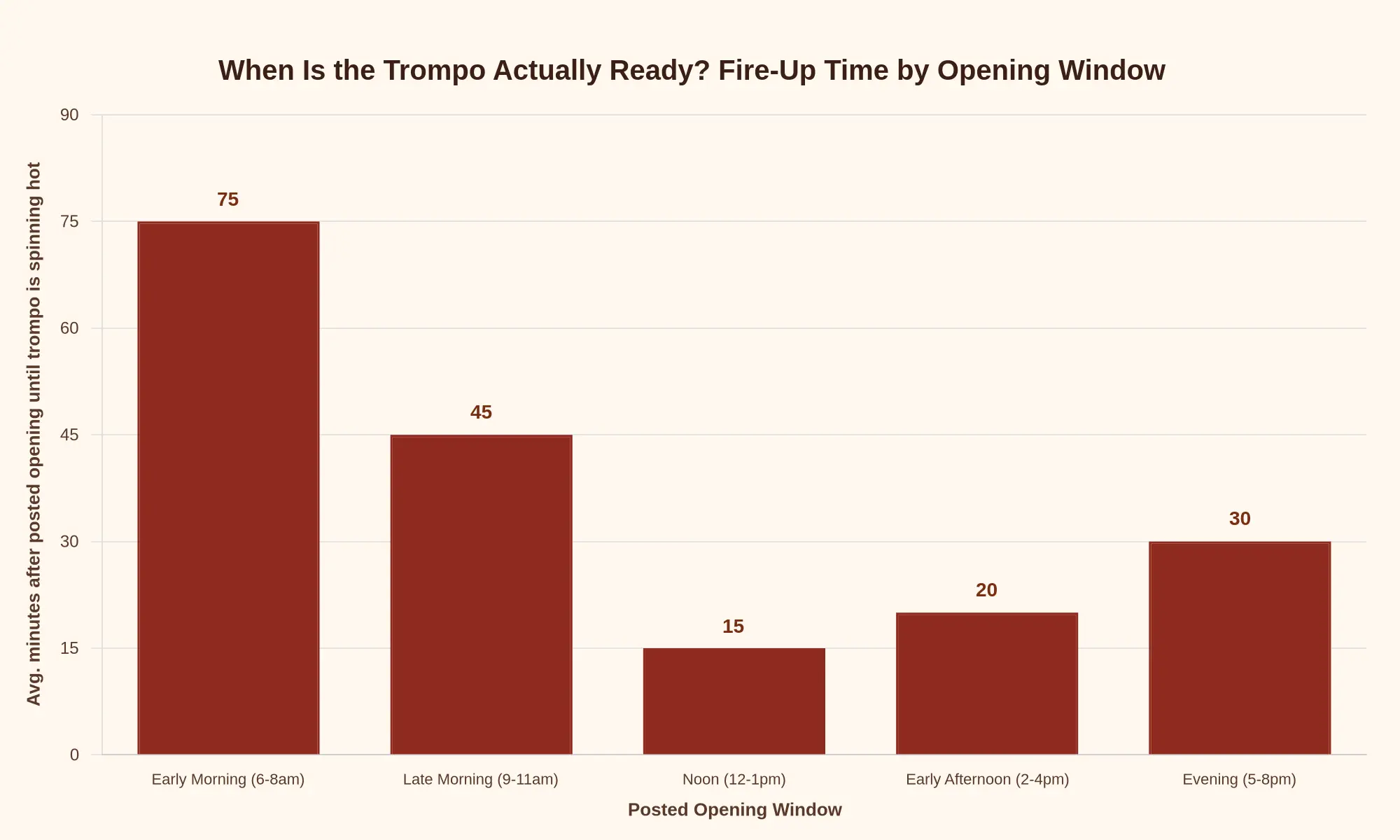
Caption: Average minutes after posted opening until the trompo is spinning hot, by opening window.
The pattern is clear: early-morning openings wait longest for a spinning trompo, while noon and early-afternoon windows get there fastest. If you want to skip the guessing game, aim for lunch and check our guide to the al pastor trompo near you before you drive over.
Why Posted Hours Differ from Trompo Fire-Up Time
The sign says 10 a.m. You roll up at 10:05 and there is no al pastor in sight. That is not laziness; the trompo is still working, and the posted hours never told you the whole story.
Doors open when the kitchen is ready for customers. The trompo runs on its own clock, and there is real work between unlocking the front and pulling the first slice of pork that is actually ready to shave.
Marinating and stacking take hours
The meat gets achiote, chile, vinegar, and spice well before anyone shows up, and the marinade needs time to soak in. Then someone stacks the thin slices onto the spit, layer by layer, pressing pineapple and onion in as they go. A sloppy stack falls apart under the flame. A good one is a small sculpture.
The trompo needs to roast before it is slice-ready
A fresh trompo is not ready the second it starts spinning. It roasts for a while, the outer layer crisping and caramelizing while the inside stays tender. Only then does the taquero shave those ribbons onto the tortilla. Serve it too early and you get pale, dry meat with none of that charred edge.
Weather and demand shift everything
A cold, rainy morning slows foot traffic, so kitchens may fire up later or hold back. A sunny weekend or a game day does the opposite: the trompo spins earlier and empties faster. Nobody wants to roast two full spit-loads on a slow Tuesday.
The gap between doors open and al pastor ready
You might walk in during posted opening hours and hear, “al pastor in twenty minutes.” That gap is normal. Grab a drink, watch the flame, and wait for the real thing.
Once you understand how a working trompo and the roast come together, you plan around the meat instead of the door, and you stop eating cold slices carved hours earlier.
Stand outside a taquería long enough and you can tell the moment a trompo is fired up and ready. Here is what to look for.
- A spinning spit. When that stack of marinated pork rotates steadily against the flame, it has been loaded and cooked down to temperature.
- The smell of charring pork and pineapple. That sweet, smoky aroma drifting onto the sidewalk is the clearest signal there is.
- Bark and caramelization up top. A deep reddish-brown crust, glistening and a little crispy, means the outer layer is ready to shave.
- The sound of the knife. A rhythmic scrape as the taquero peels thin sheets off the spit.
- A fresh pineapple on the crown. A whole pineapple perched on top, juice dripping down the pork, means the fruit is fresh and the flavor is still building.
- The taquero’s rhythm. Hands flip a tortilla, catch a falling slice, and crown it with pineapple in one motion.
Timing Your Visit to Catch a Freshly Fired Trompo
To catch al pastor at its best, plan around the roast, not the door.
Call Ahead Before You Go
Pick up the phone and ask one question: “When does the trompo go up today?” Staff usually know the plan, and a thirty-second call saves you from staring at an empty spit. A specific time is a good sign; a shrug is not. You can also scope out an al pastor trompo near you before you dial.
Learn the Daily Fire-Up Rhythm
Most taquerías light the trompo twice: once mid-morning and again in the late afternoon for dinner. The earliest slices come off right as the first layers turn crisp, which is the sweet spot. Watch for the cook trimming the outer edge of the spit; that means the fire-up has fully taken hold and the meat is ready to carve.
Arrive After the Roast, Not at Opening
Posted opening hours rarely match the first slice. The doors may open at 11, but the trompo might not spin until 11:30 or later. Show up at opening and you will stand around; show up about thirty minutes after the first fire-up and you walk straight into the good stuff.
Weigh the Low and Peak Windows
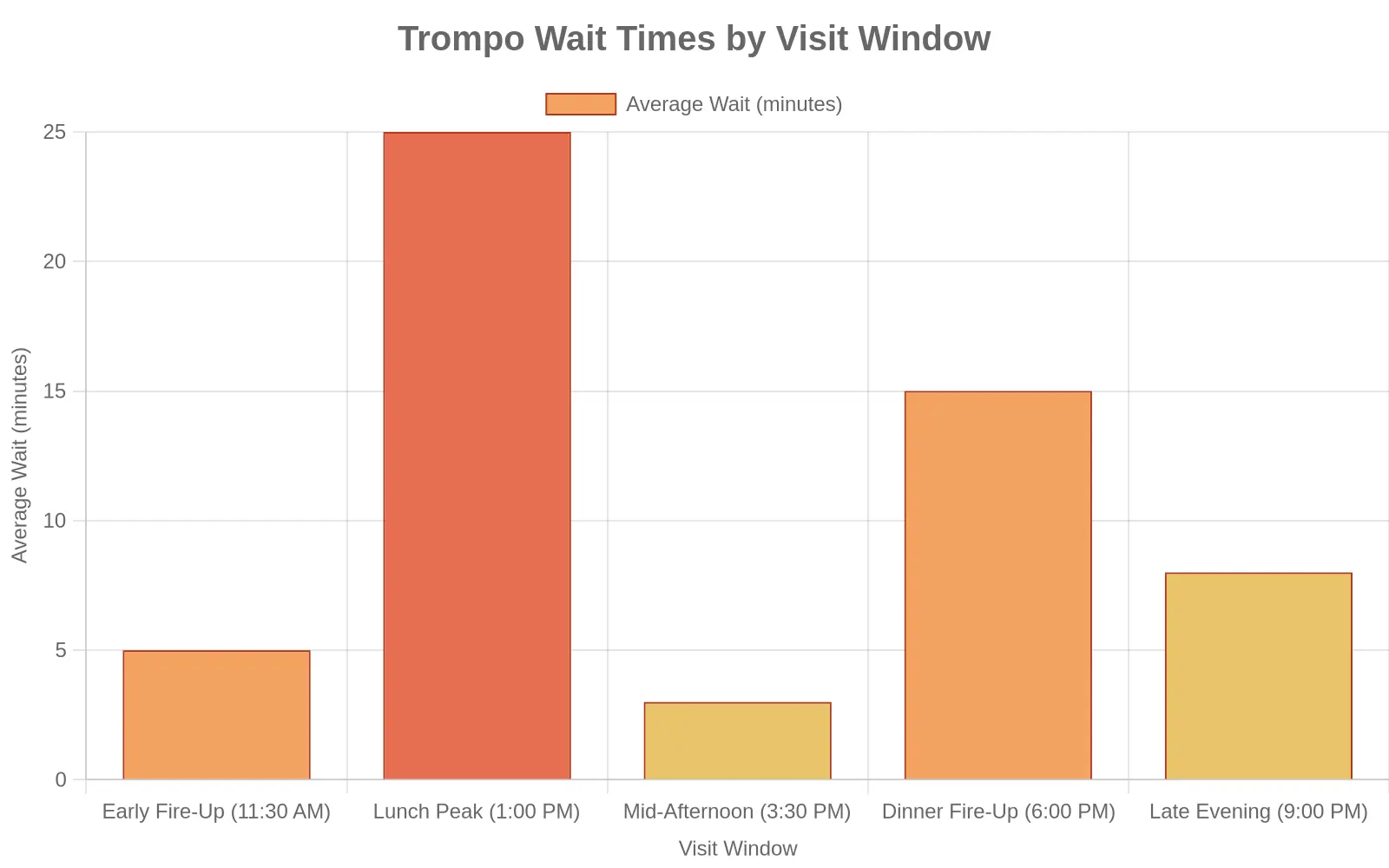
Off-peak means no line and a calmer room, but you risk a trompo that has been sitting and drying out. Peak hours mean the freshest meat because it is constantly being carved, but the line can stretch out the door. The early fire-up gives you both: short waits and meat that just came off the spit.
Quick Reference
| Visit Window | Typical Wait | Freshness |
|---|---|---|
| Early fire-up | Short | Excellent |
| Lunch peak | Long | Excellent |
| Mid-afternoon | Short | Fair |
| Dinner fire-up | Medium | Excellent |
| Late evening | Short | Fair |
The Trompo Clock: When Do Taquerías Actually Fire It Up?
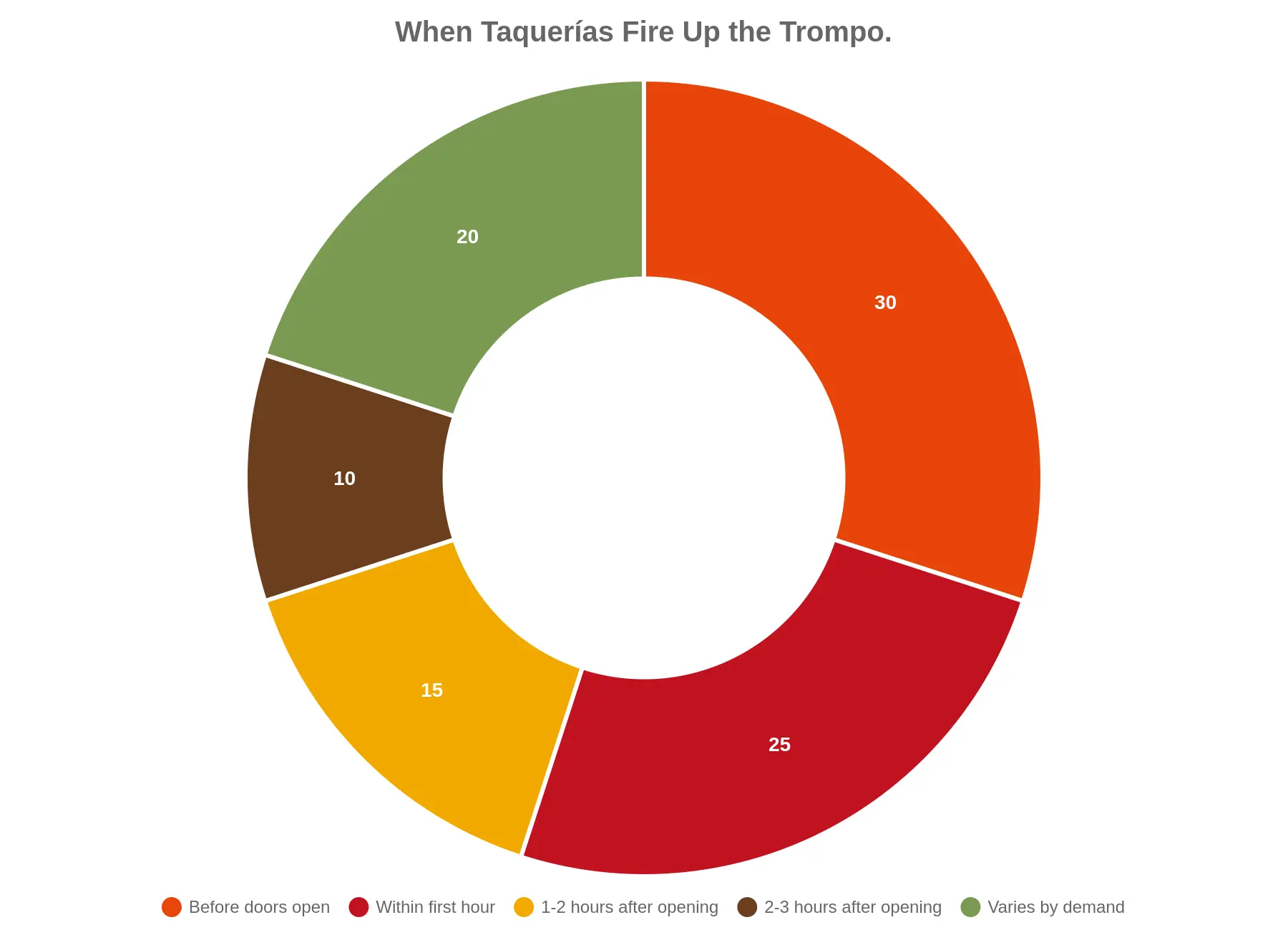
Caption: Estimated share of al pastor taquerías by trompo fire-up window.
The chart estimates that about 30% of al pastor taquerías have the trompo spinning before the doors open, while 20% fire up whenever demand shows. That is why the posted time rarely tells you when your first slice hits the grill. If you want to read the room before you drive, pair this timing breakdown with our guide on finding al pastor trompo near you.

Start with the posted hours, but do not treat them as gospel. From there, estimate the trompo fire-up window, since the spit rarely gets spinning the second the doors open. That judgment splits two ways: call ahead to confirm the trompo is turning, or arrive a little later so the meat has had time to caramelize. Both paths end the same way, with fresh al pastor shaved to order. Posted hours tell you when to show up. The trompo tells you when it is worth showing up.
The Takeaway: Read the Fire, Not the Sign
Posted opening hours tell you when the doors unlock and the lights come on. They do not tell you when the al pastor is actually singing. That is what the trompo fire up does: the spit spinning, the flame kissing the edge of the pork, the pineapple perched on top and dripping down the stack. That is the moment worth chasing, when the first slices come off tender-crisp with charred little edges.
So on your next hunt for al pastor tacos near me, treat it as a rhythm, not a rulebook:
- Check the time, then add a buffer. If a spot opens at 11, the trompo usually hits its stride 30 to 60 minutes later.
- Watch the crowd, not the clock. Locals line up when the meat is at its peak, not when the sign flips.
- Use your nose and ears. Smoke, sizzle, and the thwack of the knife mean you are right on time.
The best taquerías run on feel more than schedules. Trust the trompo over the sign and you will not settle for mediocre al pastor. Buen provecho.