
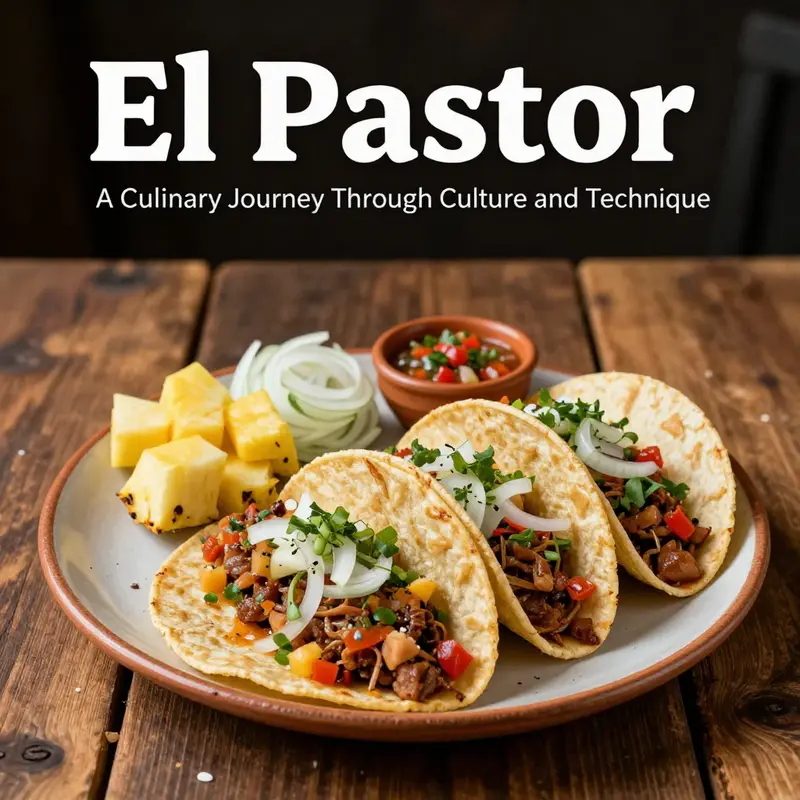
El Pastor, a beloved Mexican dish, intertwines rich cultural history with mouthwatering flavors. Originating from the fusion of Mexican and Middle Eastern culinary techniques, El Pastor captures the essence of adaptation and innovation in gastronomy. This article will delve into its historical roots and significant cultural relevance, as well as the intricate techniques and flavor profiles that create this iconic dish. Both business owners and culinary enthusiasts will discover how understanding El Pastor can enhance menu offerings and deepen cultural appreciation among diners.
Al Pastor: History on a Trompo and Its Global Table
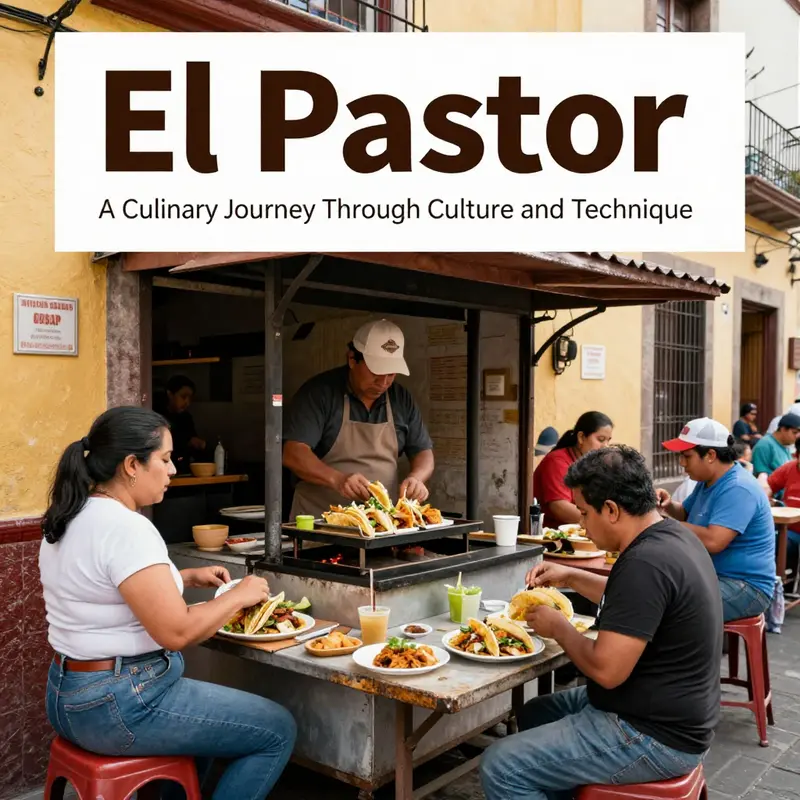
In the glow of street market flames, al pastor rises from a simple technique into a living tradition. A vertical spit rotates meat that caramelizes beneath the heat while a crown of pineapple shines above, its juices basting the pork as it cooks. The moment of shaving thin ribbons from the trompo is not just dinner; it is memory being carved into tortillas, a dialogue between immigrant craft and local palate.
Origin stories point to central Mexico, with Puebla and Mexico City playing important roles as the technique traveled with Lebanese migrants who carried the shawarma method on a new coastline. The transformation is more than method; it is culture adapting, preserving drama and edge while infusing the recipe with citrus, achiote, and chile. The pineapple atop the spit is a practical counterpoint, balancing heat with sweetness and signaling a hospitality that invites sharing.
In the kitchen the marinade marries sour, sweet, and smoky. Pork shoulders a brine of citrus, garlic, onion, achiote paste, guajillo and ancho chiles, cumin, oregano, and a splash of vinegar. The slice that emerges carries a crisp edge, a tender interior, and a chorus of flavors that invites toppings of onion, cilantro, lime, and salsa verde or smoky adobo. The technique remains the throughline even as variations appear in markets around the world.
Globally, al pastor travels beyond borders while asking, what is authentic? Purists insist on pork, pineapple, and a balance of achiote and chiles. Others reimagine the flavors in tacos, burritos, or pizzas, testifying to food as living heritage rather than frozen tradition. The pineapple perched above the trompo endures as a symbol of dialogue between origin and adaptation, keeping the story edible for new readers and new cooks. For those seeking deeper technique and history, resources such as Al Pastor Trompo Near Me and well-tested recipes from Food & Wine can be guiding lights: https://taqueriaelpastor.shop/al-pastor-trompo-near-me/ and https://www.foodandwine.com/recipes/al-pastor-tacos.
Rotating Heritage: The Craft, Flavor, and Culture of El Pastor Food
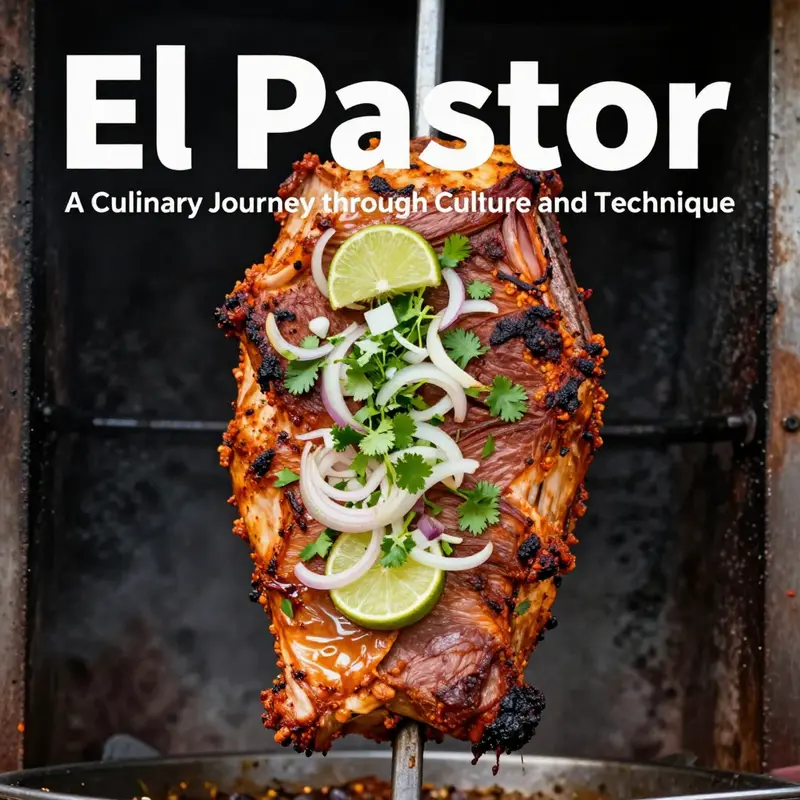
El Pastor is more than a dish. It is a hinge where history, technique, and appetite meet to tell a story of cultural exchange and local adaptation. In the echo of sizzling meat on a vertical spit, one can hear the footsteps of merchants, immigrants, and cooks who shaped a Mexican staple from a distant idea. The dish began in the mosaic of Mexico City, where Middle Eastern flavors met indigenous traditions, and it evolved into something unmistakably Mexican while still bearing the marks of its diaspora. The heart of El Pastor lies in a simple idea executed with a complex grace: marinate pork in a vivid paste, roast it slowly on a vertical spit, shave thin, caramelized slices, and serve them hot on a corn tortilla with a bright array of toppings. What emerges is not a single flavor profile but a conversation among acidity, sweetness, smoke, and spice, carried by the warmth of the tortilla and punctuated by the crisp snap of onion and the fresh bite of cilantro. The flavor, texture, and aroma of El Pastor invite the eater to participate in a shared ritual as old as street corners and late nights.
The origin story of El Pastor is a study in migration and adaptation. When waves of immigrants from the Middle East brought their spit roasting technique to Mexico, nearby cooks faced a practical question: how to translate this method into the pantry and palate of Mexican kitchens. The answer was to swap in locally available ingredients and to honor regional tastes. Pork became the meat of choice, not because it was mandated by custom but because it aligned with the preferences and practices of the home cooks and street vendors who popularized the taco al pastor. The paste that coats the meat is where the fusion becomes tangible. A robust adobo or recado forms the backbone of the marinade. Dried chiles, such as guajillo and ancho, are rehydrated and blended to create a deep, fruit-forward heat. The paste is enriched with achiote, a pigment and seasoning paste that yields a bright, earthy hue and a nutty, peppery undertone. A balance of acidity comes from vinegar and citrus, with lime juice often nudging the brightness to the fore, lifting the meat from richness toward a lively finish. Garlic, onion, cumin, and Mexican oregano anchor the aromatic profile, lending warmth and depth that persist through the heat and smoke.
The technique itself is a study in patience and precision. The marinated meat is layered onto a tall vertical spit, a device known in kitchens as a trompo. As the stack rotates near a heat source, the outer layer browns into a thin, crisp crust while retaining a juicy center. The continuous rotation makes for even cooking and the opportunity to shave fresh slices as the outer edge caramelizes. The shaved strips are then tucked into soft corn tortillas, where the real alchemy happens in the assembly. The tortilla acts as a neutral stage upon which the choreography of toppings performs. A handful of chopped white onion adds crisp brightness, while fresh cilantro brings a green, peppery note that cuts through the fat. A squeeze of lime punctuates the bite, offering a tart counterpoint that keeps the palate alert. A dab of salsa verde or a more rustic, smoky salsa can harmonize the heat and bring the tang into sharper focus.
Pineapple occupies a singular, almost joyful role in the Al Pastor experience. It is neither purely garnish nor merely sweet foil; it is a functional partner to the pork. Grilled pineapple brings a caramelized sugar that mirrors the natural sugars developing on the meat’s surface, while its acidity and enzymatic properties have long been celebrated for tenderizing factors. In practice, pineapple can accompany the meat in the trompo or be offered as a grilled wedge alongside the taco. The fruit introduces a bright contrast that awakens the dish and bridges the gap between smoky depth and fresh brightness. The combination of sweet pineapple, tart lime, and the savory, roasted pork creates a balance that is difficult to reproduce with a single-note seasoning. The memory of the flavor lingers not as a single flavor but as a memory of the interplay: sweet and sour dancing with fat and heat, all wrapped in a warm tortilla.
Home cooks seeking to recreate the magic face a practical truth: the trompo, that iconic vertical spit, is not a typical household appliance in most kitchens. Yet the essential logic of the technique travels well. Modern adaptations rely on grills, broilers, or even a sturdy cast-iron vertical roaster to simulate the effect. The aim is to achieve the same visual cue—the edge of the meat turning bronzed and slightly crisp—while preserving the tenderness below. The marinade should permeate enough to perfume each slice with the adobo’s depth, but not so aggressively that the meat loses its own character under the weight of the spices. In practice, this means marinating for a few hours to overnight, depending on the cut and the strength of the paste, and then cooking at a steady, moderate heat that allows the outer layer to caramelize without drying out the interior. It also means recognizing that the finishing touch is the assembly: the tortilla, onion, cilantro, lime, and salsa must be present and balanced in serving. The moment a tortilla is warmed, a few slices of pork are added, and the toppings are layered, the dish comes to life as a single, coherent experience rather than a compilation of ingredients.
Flavor-wise, El Pastor travels a path that is at once familiar and surprising. The base of the paste is a chorus of chiles, with guajillo bringing a fruity, peppery heat and ancho lending a velvety sweetness. Achiote contributes a distinct earthiness and a ruby hue that immediately signals warmth and depth. The acidity from vinegar or citrus is not merely a brightener; it is a tenderizer and a preservative in an environment where the meat would otherwise lean toward heavy richness. The garlic and oregano introduce aromatic sharpness, while cumin adds a dry, resinous note that lingers after the bite. This composition is not a single flavor but a layered field where each component leaves space for the next to emerge. The pineapple, when present, is not just sugar with a tang; it is a counterweight that helps the palate reset after the long, preserved heat of the marinade. The result is a taco that can satisfy a craving for smoky, tangy, and slightly sweet in one bite, and then reveal new nuances with each subsequent chew.
The global spread of El Pastor is a testament to the way food travels with people and language. In cities around the world, you can encounter tacos al pastor with the same foundational logic, yet each rendition carries a local signature. Some cooks lean into a slightly different mix of spices to reflect regional produce, or they tweak the sweetness to align with nearby tastes. Others opt for chicken, a variation that preserves the technique while presenting a lighter alternative. What remains constant is the ritual: the slow, patient roasting, the seen edge of the meat turning crisp, and the act of shaving fresh portions to order. In many of these kitchens, El Pastor becomes a canvas for neighborhood memory—each stall adding its own brushstrokes to a living, evolving portrait of a dish that began with distant traces but now belongs to the street-level ritual of consumption and sharing.
For readers who want to delve deeper into the mechanics and best practices, there is value in looking at home-friendly guidelines that distill the chef’s craft into accessible steps. The practical challenge is to preserve the drama of the spit’s rotation while ensuring the meat remains tender and flavorful. The marinade should be prepared with a careful balance of heat and acidity, respecting the need for color without sacrificing aroma. The protein is then roped into the strategy of heat management, which means controlling the flame, moving the meat away from the hottest zone as needed, and letting the outer layers reach a caramelized crust that crackles at the edge when shaved. The texture remains the signature: the exterior carries a toasty, slightly chewy bite, while the interior stays juicy and supple. The tortilla becomes a vehicle that carries the scent of the roast to the tongue, and the toppings act as punctuation marks that guide the overall experience rather than overpower it.
From a cultural standpoint, El Pastor stands as a brief history lesson in culinary fusion. Its name, shepherd style, hints at a lineage that is not purely Mexican nor purely Middle Eastern, but a hybrid born of movement and adaptation. The word shepherd conjures an image of caretaking, of guiding a flock, and in a sense, the cooks who popularized al pastor were shepherds of a culinary tradition: guiding disparate ingredients, techniques, and tastes toward a common table. It is a reminder that food is not static. It grows with communities, absorbs new colors, and then returns to the street as a shared feast. The tortilla, onion, cilantro, salsa, and lime are not side players but essential elements that frame the roasted pork. The pineapple, when included, serves as a reminder of the fruit’s role in Mexican kitchens and a nod to the dish’s tropical, luminous dimension. This is why El Pastor continues to flourish in markets and kitchens far from its origin: it is not merely a recipe but a dynamic practice that invites improvisation and conversation.
In considering how this dish is received, one notices the sensory journey it invites. The aroma first draws people in—smoky, tangy, and bright all at once. The sizzle, the heat rising from the roaster, the soft crackle of the edges, and the sudden sweetness from the pineapple create a chorus of sensations. When the first bite lands on the tongue, the palate experiences a quick sequence: the zing of lime and the brightness of onion, the cumin and oregano’s warmth, the deep fruitiness of the chiles, and the roasted, almost caramel-like crust. Each bite offers a new balance and a new emphasis, which is why the taco al pastor remains a popular street food and a symbol of regional pride. It is a dish that travels well, both across continents and through the years, without losing its core identity or its vitality on a crowded plate.
For those who want to explore further, a resource that keeps pace with the evolving craft of al pastor provides a detailed, home-friendly guide. The interplay of techniques and flavor profiles can be traced in culinary writing that maps the journey from marination to perfection, and from the trompo to the tortilla. A practical example of this approach appears in authoritative recipe guides that walk through the steps of marination, roasting, and serving, emphasizing the critical role of balance, timing, and heat management. If you are seeking a concise, home-tested overview of the dedicated tacos el pastor page, you can explore this resource as a starting point: dedicated tacos el pastor page. It offers insight into how cooks organize the components of the dish and adapt the core technique for family meals and small gatherings.
As the chapter closes, the enduring appeal of El Pastor is clear. It embodies movement and memory, a culinary bridge between continents that has found a home on the street stalls and on kitchen counters. Its technique, steeped in the patience of slow roasting, gives the palate a theatre of texture and taste. Its flavor profile—rich, smoky, slightly sweet, with bright acidity—offers a complete arc in a single bite. The dish is a reminder that the most memorable foods arise when cultures embrace one another, translating unfamiliar ideas into familiar pleasure. The myth and the method live together in the warm puff of steam as the meat is shaved, the tortilla is warmed, and the toppings are layered. In that instant, El Pastor becomes not only a meal but a shared memory of migration, adaptation, and the joy of discovery on a crowded table.
External reading can extend the sense of place and history beyond the local scene. A detailed, wide-scope look at Mexico’s legendary al pastor tacos provides context and nuance about how the dish has traveled and transformed across kitchens and continents. See the broader account here: https://www.bbc.com/travel/article/20230418-mexicos-legendary-al-pastor-tacos
Final thoughts
El Pastor is more than a dish; it embodies a rich tapestry of cultural exchange and culinary tradition. Understanding its historical roots and masterful techniques not only enriches culinary knowledge but also offers business owners insights into creating an authentic dining experience that resonates with customers. By incorporating El Pastor into your menu, you invite patrons to participate in a shared cultural narrative, fostering appreciation for this classic fare. Embrace the vibrant story of El Pastor and let it elevate your culinary offerings and customer engagement.

