
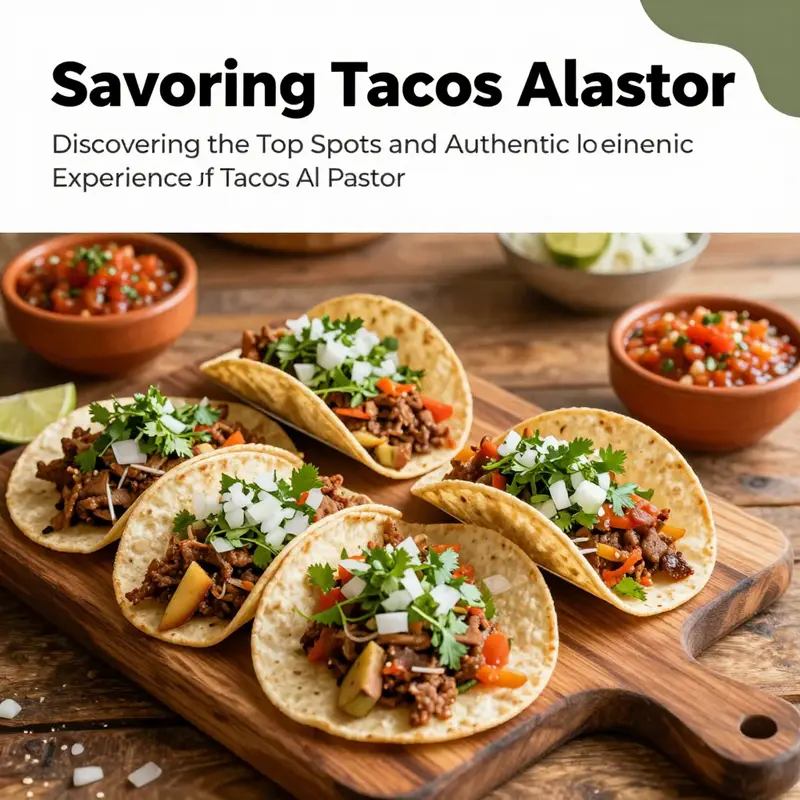
Tacos Al Pastor embodies the vibrant soul of Mexican street food, captivating food lovers in San Jose with its rich flavors and cultural heritage. This beloved dish, influenced by Middle Eastern shawarma and perfected through generations, has inspired numerous taquerias within the city. Business owners looking to enhance their culinary offerings or connect with local gastronomes will find immense value in understanding the best places to enjoy Tacos Al Pastor, as well as the authentic experience it brings to the table. This article delves into premier restaurants that serve these mouth-watering tacos and unpacks the elements that define the genuine Tacos Al Pastor experience, setting a benchmark for food quality and cultural representation.
When the Trompo Turns: A Tasting Tour Through San Jose’s Tacos Al Pastor
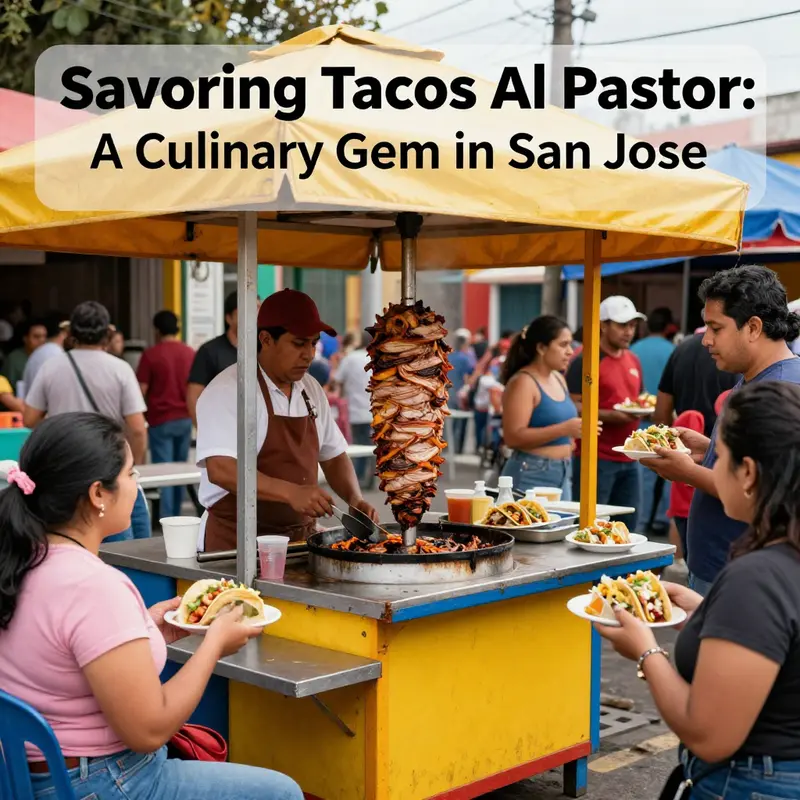
San Jose sits at the crossroads of cultures and cuisines, a city where the pace of tech innovation often meets the slow, patient ritual of a street-side taco stand. In this landscape, tacos al pastor are more than a snack; they are a living bridge between old street-food traditions and the city’s contemporary appetite for experience. The al pastor here is not a single flavor or a solitary plate, but a dynamic practice that unfolds with the turn of a trompo, the glow of a griddle, and the chorus of cumin, citrus, and smoke that lingers in the air. To follow the aroma is to begin a quiet conversation about authenticity, adaptation, and the way a single dish can bind a neighborhood together across generations. In San Jose, the trompo is a humble piece of theater, and the meat—marinated in achiote and citrus, kissed by fire—takes on a tenderness that makes the wait worthwhile. The first bite carries a chorus of contrasts: the caramelized edges providing a gentle crunch, the meat staying moist inside, and the pineapple providing a fleeting sweetness that cuts through the spice just enough to keep the palate intrigued. The tortillas, made by hand, are essential actors in this performance. They are often warm and pliant, with a slight corn sweetness that bears up to the weight of the toppings and the sauce. The best al pastor relies on them to cradle the flavors rather than fight for attention, and in San Jose that balance is a starting point for tasting conversations that can stretch well beyond a single taco.
In the broader Bay Area context, San Jose’s al pastor scene exists alongside others in nearby cities, each with its own local stamp. But what makes San Jose singular is not just the quality of the spit-roasted pork, but the way the city treats al pastor as a shared language. It’s common to see a row of stands or small taquerias where the cook’s next move is announced by the sizzle over the charcoal and the soft clink of a pineapple ring landing on a hot surface. The pineapple is not merely garnish here; it is an essential character in the al pastor narrative. The fruit’s sweetness rounds the chili, the citrus brightness lifts the meat, and the onion and cilantro add a sharp green lift that brightens every mouthful. When these elements converge, the experience becomes generous rather than singular. It is a dish meant to be shared, discussed, and revisited, almost as a ritual of culinary memory that evolves with every visit.
What matters most in San Jose is the intimate relationship between technique and texture. The trompo—this vertical spit that slowly rotates the marinated pork—serves as the city’s metronome. The meat’s journey from marinade to caramelized exterior to tender interior is a study in controlled heat. The marinade, often a careful blend of achiote, garlic, citrus, and spices, bathes the pork in a layer of color and aroma that is instantly recognizable. As the meat turns and re-encounters the heat, a crust forms that offers a subtle chew and a whisper of smoky depth. The trick is to maintain juiciness without allowing the surface to dry. In many San Jose taquerias, you can watch the slices being shaved off in thin, almost lacquered ribbons that glisten with fat, then folded into a tortilla that has already absorbed some of that smoky essence. The first bite is a reminder that al pastor is not a single note but a chord: the salt of the pork, the tang of citrus, the heat of chilies, the sweetness of pineapple, and the cool, fresh bite of onion and cilantro all singing together.
The sensory richness of the dish invites a slower form of appreciation. It invites you to notice the balance of elements—the way the pineapple’s acidity counters the pork’s richness, the manner in which the herbs provide a crisp brightness that sharpens the finish, and the way the tortilla acts as a quiet stagehand, fragile enough to absorb juices yet sturdy enough to hold up under pressure. In San Jose, this balance often arises from a careful menu philosophy that treats al pastor as a cornerstone of a broader, inclusive approach to Mexican street food. A good taqueria in this city will pair the al pastor with house-made salsas that are not merely spicy but deeply considered in flavor, offering layers that can echo the marinade or flip it on its head. The salsa roja may arrive bright and pepper-forward, while a verde might present herbal notes that remind the palate of fresh tomatillos and cilantro. A skilled cook will know when to blur these differences—perhaps a drizzle of a citrusy salsa that mirrors the marina—so that the eater experiences a seamless progression from bite to bite rather than a series of sharp, disjointed flavors.
The social texture of San Jose’s al pastor scene is equally important. In a city with a dense, diverse community, taquerias become informal gathering spaces where coworkers, families, and students converge between classes or shifts. In this setting the al pastor taco takes on a communal role: it is something to share, something to compare, something to mutate with a personal touch. Some cooks add a slight twist—rojo sauces that incorporate toasted spices, a hint of chipotle smoke, or a tang of pickled onion—without ever departing from the core structure that makes al pastor recognizable. Others lean toward a more traditional approach, relying on the pure, unadorned marriage of meat, pineapple, onion, and cilantro. The result is a city that can speak in many flavors at once, a city that understands that authenticity is not a fixed recipe but a living practice of growing together through food.
From the vantage point of someone tracing the best places to taste al pastor in San Jose, there is a quiet thrill in sampling across a few spots and noticing what remains constant and what shifts with a cook’s personality. One taqueria might emphasize a leaner cut and a lighter marinade that lets the grill marks and the juiciness carry the day. Another might lean into the marinade’s intensity, offering a deeper, more assertive pork flavor that lingers long after the last bite. Still another might surprise with a modern twist—slightly fancier garnishes, a clever house salsa, or a creative grazing of toppings that nods to contemporary tastes without breaking the dish’s essential DNA. This spectrum does not dilute the experience; it enriches it, offering a sense of discovery that makes a tasting day feel like a culinary trek rather than a simple meal. And in the midst of this exploration, a well-chosen guide can be invaluable. For those who want a practical starting point that aggregates options without replacing personal discovery, a curated resource such as the al-pastor-tacos-near-me guide can offer direction while still inviting the stomach to do its own wandering. The link is here for readers who want to wander with intention: al-pastor-tacos-near-me.
In practice, a successful sojourn through San Jose’s al pastor landscape often begins with balance and ends with generosity. Balance means recognizing the central role of flame and time in the preparation, the importance of clean, handmade tortillas, and the way toppings should always support rather than overshadow the star: the roasted, seasoned pork. Generosity means clear portions, a willingness to accommodate different spice levels, and a hospitality that makes a visitor feel that the kitchen is opening its doors, if only for a moment, to share its tradition. When the trompo spins and the pineapple glows, the eater steps into a ritual that has learned from past generations yet remains fully alive in the present. It is this living tradition that makes San Jose’s tacos al pastor more than a meal. It is a conversation—one that moves from the smoky air above a street-side grill to the quiet, grateful pause that follows the final bite.
The chapter on San Jose’s al pastor scene would be incomplete without paying attention to the particular places that have become touchpoints for locals. While every city block can hold a hidden gem, a few nearby names consistently surface in both community conversation and trusted guides. The allure is not simply about a perfect slice of pork; it is about the total experience—the aroma, the texture, the pace of service, and the sense of place that makes a particular taqueria feel like part of the neighborhood’s shared memory. Yet, even as these favorites endure, the city’s al pastor map keeps evolving. A stand may begin with a simple setup and, over time, introduce its own salsa, its own unique garnish, or its own twist on the classic preparation. That evolution does not dilute the authenticity of the dish; it enriches it, offering a sense that San Jose continues to grow while keeping a faithful thread to its roots. The result is a culinary mosaic in which every bite carries a story—one that invites repetition, discussion, and, most importantly, delight.
For readers who want a broader frame, the Bay Area’s dining landscape offers a perspective on how al pastor travels and mutates while preserving the core appeal: the vertical spit, the slow sear, and the bright, vibrant balance of flavors. The San Francisco Chronicle’s guide to the best tacos in the Bay Area provides a wider lens on the regional possibilities, placing San Jose’s experiences within a larger chorus of voices and techniques. You can consult that exterior reference here: https://www.sfgate.com/food/article/Best-Tacos-in-the-Bay-Area-2023-14567890.php. In San Jose, though, the most personal guide remains the one you write with your own fork and your own curiosity, lingering over a single bite, and then choosing the next bite with intention rather than haste. The city invites you to slow down, to linger at the counter, to watch the cook’s hands, and to let your senses guide you toward the combination that sings most clearly to you. And as you move from stand to taqueria, you begin to hear a familiar rhythm: the sizzle, the clatter of utensils, the soft murmur of neighbors exchanging recommendations, and the sigh of satisfaction that follows a well-made taco. In this way, the trompo continues to turn, and the city continues to listen, tasting its own history in every layered bite.
Trompo at Dusk: An Immersive Journey into San Jose’s Al Pastor
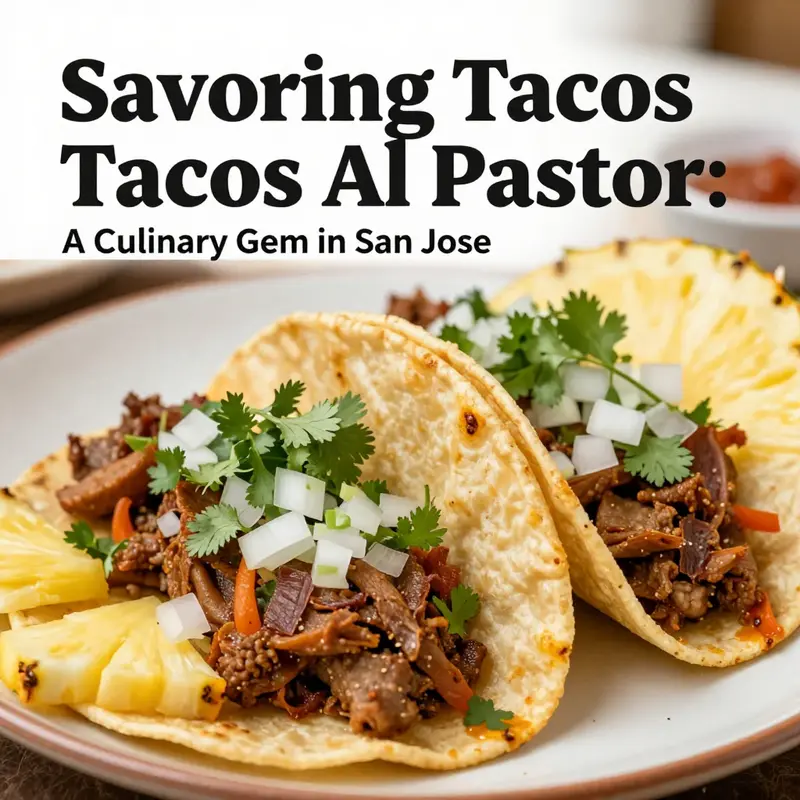
The street-level pulse of San Jose often reveals its strongest flavors after the sun sinks and the city lights begin to glow. In this particular corner of Silicon Valley, al pastor is not merely a dish; it is a ritual carried by the night air, a rhythm that taps into memory and community at once. The scene unfolds with a vertical spit, a trompo, rotating slowly as a steady flame knits smoke into a lacquered crust. The pork, marinated in a blend of chilies, garlic, and citrus, leans against the heat until its edges blister with a caramelized kiss. Pineapple chunks, sweet and bright, wait their turn, ready to puncture the smoke with a tangy burst that cuts the richness and keeps the palate honest. Each slice reveals the alchemy of patience: meat thinning and catching on the planed blade, juices brightening the tortillas, the world narrowing to a focused, luminous bite. This is the core image that travelers and locals alike carry back from a night’s stroll in the city—al pastor as street theater, as a shared ritual rather than a solitary indulgence.
In San Jose, the authenticity of al pastor is measured not by flash but by lineage and technique. The core of the experience rests on traditional preparation and the use of fresh ingredients, a theme that runs through the city’s most beloved spots. A 2026 Yelp roundup highlighted several local favorites that consistently earn trust for their classic approach and reliable flavors. The emphasis across these venues leans toward simplicity done well: marinated pork roasted slowly on the trompo, clean and efficient service, tortillas handmade with a softness that yields to the pressure of a fast, expert bite. The arcing sizzle of meat meeting flame, the aroma drifting through a market street, and the sight of pineapple glistening against a cast-iron spit all work together to anchor the eater in a sense of place that feels almost ceremonial.
The choreography of serving al pastor in this city is telling. The cook’s knife glides along the shaved edge of the rotating meat, uncovering a warm, pinkish slice that carries a hint of smoke and citrus. The tortilla—golden, pliant, warm—appears in a quick, practiced hand, as if the entire experience were rehearsed through countless evenings of service. The toppings arrive as a chorus: a handful of chopped white onion, a scattering of fresh cilantro, a wedge of lime, and a small scoop of salsa that can range from sharp and vinegary to creamy and mild, depending on the stall. The pineapple, always present, earns its own round of applause. Its sweetness lingers on the tongue, a counterpoint to the pig’s bold seasoning and the peppery heat of the salsa. In every bite, the contrast between heat and sweetness, crisp char and tender meat, coarse salt and bright cilantro, becomes a single, coherent memory rather than a series of tastes. The experience is designed to be quick, satisfying, and deeply evocative—a reminder that good street food is often as much about time and place as it is about the recipe itself.
Yet authenticity in San Jose’s al pastor is also about texture and patience. The trompo’s exterior bears a gentle crust that crackles when sliced, a sign that the meat has roasted evenly without drying out. The interior remains juicy, a misterioso core that yields fragrance with every mouthful. The tortilla, pressed to a precise thickness, melts with the meat’s heat and carries the toppings without tearing. The pineapple’s role is not merely sweet—it is architectural, balancing the savor with acidity and elevating the overall profile so the dish reads as a complete composition rather than a collection of elements. For someone tracing the culinary lineage of al pastor, this balance matters as much as the spice blend itself. In San Jose, the reverence for simplicity—well-kept equipment, fresh ingredients, timely service—often outshines any need for showmanship. The best practitioners let the meat and the tortilla speak first, allowing the pineapple to punctuate rather than overpower.
This approach mirrors the broader culinary mosaic of the city, where immigrant traditions have found a way to endure while adapting to a dynamic, cosmopolitan audience. Al pastor in San Jose carries the memory of its origins but wears the city’s energy with ease. The result is a dish that travels well: it can be a late-night snack after a long day, a quick lunch between meetings, or a comforting, unpretentious dinner after a weekend stroll through southward markets. The best versions are rarely flashy; they are steady, reliable, and deeply satisfying because they honor the core elements—marinade, heat, pineapple, and tortilla—without letting any single component overwhelm the rest. Patrons often describe the experience with a sense of familiarity, as if they are returning to a favorite pattern that they can predict yet still savor fully. The predictability is not stasis; it is trust built on repeated, faithful execution.
The sensory memory of al pastor in San Jose is inseparable from social life. A stall can become a small stage where musicians might stroll by to share a song, or where neighbors catch up on the week’s news while the meat roasts nearby. The act of ordering, of placing the order and receiving the fresh plate in minutes, is a social ritual in itself. There is a rhythm to it: a quick greeting, the precise articulation of how many tacos one wants, a nod to indicate how much pineapple or how spicy a salsa should be. The space around a stall is often a crossroads of languages, a microcosm of the city’s broader cultural currents. The chatter, the laughter, the clatter of plates, the steam from the grill—all of it weaves into the fabric of an evening offered to anyone who steps into the scene with an open palate and a patient appetite.
Within this landscape, the most enduring spots have earned their status not by fame alone but by a pattern of consistency that becomes almost instinctive for regulars. The 2026 Yelp list, while not a universal map, points to a thematic pattern: places that honor traditional preparation, that keep ingredients fresh, and that deliver a sense of welcome as part of the dining experience. A stand-out in this ecosystem earns trust by showing up every day with the same warmth and the same standard of flavor. It is not the flash of a flamboyant display that captives the heart, but the quiet confidence of a cook who has a long and faithful relationship with the trompo, the knife, and the tortilla. For newcomers, this means allowing some time to observe, to listen to the sizzle, to watch the meat transform from raw to ready, and to feel the texture of a tortilla as it yields to the warmth of the filling. There is a tactile pleasure in these moments, an assurance that what follows is a well-made, consistently satisfying bite.
For travelers who want a concrete starting point, the local guide and the more established review platforms converge on a familiar reality: al pastor here is best approached with patient curiosity and a willingness to follow the nose toward smoke and citrus. A practical approach is to locate a stall near a pedestrian corridor or a market block, where the bread-and-meat signal is strong and the crowd is a living, breathing indication of how well the dish travels from the grill to the plate. In such places, you might find yourself sharing a table with neighbors who order in a steady cadence, trading tips about the salsa heat or the best times to catch the meat at its most succulent. The shared experience—people from different backgrounds gathering to enjoy something that is both simple and deeply rooted in tradition—becomes part of the meal itself. The act of eating al pastor in this city ceases to be just a personal pleasure and becomes a communal ritual that marks the passage of time on busy streets.
For those who want to explore more deeply, a practical breadcrumb leads to a nearby resource that maps these experiences and helps point toward the near-me spots in a way that respects the spirit of local discovery. A glimpse into the broader ecosystem can be found online, where readers can explore succinct reflections and traveler notes, not unlike those painted by seasoned locals who know how to read a city’s food map. If you are curious to dive into such an account, you can follow a nearby link that presents a straightforward tour of the area’s al pastor offerings. This guide emphasizes the core idea: the best al pastor is not a single dish but a way of seeing a neighborhood through its food, a lens that reveals how a culture adapts while keeping its heart intact. And as you plan your own walk, consider the small, almost ceremonial steps: approach the stall, order a few tacos, allow the meat to be shaved to order, and enjoy the moment when the pineapple’s brightness settles on the tongue against the savory backdrop of the pork and tortilla.
The culinary narrative of al pastor in San Jose is not merely a recipe; it is a living tradition that thrives on trust, repetition, and community. It invites visitors to slow down just enough to taste the city’s history as it is carried forward by cooks who know their craft and by diners who recognize the value of a well-made, unpretentious plate. This is not a performance designed to dazzle with novelty; it is a craft that has stood the test of time, and in a city that prizes innovation, it remains a steady beacon of authenticity. That balance—the promise of consistent flavor in an ever-changing urban landscape—is what keeps al pastor relevant here. It signals that the city’s appetite for tradition can endure alongside its appetite for change, a harmony that makes San Jose a compelling destination for anyone seeking the true taste of this beloved Mexican street food.
A practical note to travelers: the best al pastor is often found where the crowd gathers, where the scent of roasting pork mingles with the chatter of diners and the glow of streetlights. It is here, in the glow of a safe, welcoming neighborhood, that a person can observe the ritual in its full form—the preparation, the slicing, the assembly, and the final bite that embodies both ancestral technique and the city’s modern, inclusive spirit. If you move through these spaces with curiosity and a patient palate, you will start to notice the subtle differences that make each stall unique, even as they share a common core. Some places emphasize heat and spice, others highlight the pineapple’s sweetness or the tortilla’s soft chew. Together, those variations form a spectrum that helps define San Jose’s al pastor as a living tradition rather than a fixed, static dish. It is a reminder that authenticity in food often lies not in a singular method but in the fidelity to a family of methods that have proven their worth over time.
For readers who want a quick, practical entry point into this experience, a nearby resource offers guidance tailored to locals and visitors alike. The link below points toward a broader catalog of al pastor options in the area, with one page that emphasizes nearby accessibility and the ease of finding these flavors in a city that moves quickly but remains hospitable. Tacos El Pastor near me. This anchor helps travelers orient themselves as they plan a short detour from familiar routines and into streets where history tastes of citrus and smoke. The connection between place, technique, and memory is perhaps most apparent when the trompo turns at dusk, and a line of tortillas waits to be filled with that first, telling bite.
External perspectives echo this sentiment. A trusted snapshot of traveler impressions appears on a renowned review platform, where readers consistently praise the reliability of traditional preparation and the efficient, friendly service that typifies these stalls. The most informative write-up highlights not only the flavor profile but the experience of savoring al pastor in a neighborhood setting—where the pace is unhurried enough to notice the crackle of the crust, the scent of the marinade, and the sweet interruption of pineapple. For readers seeking an external validation of what this chapter describes, the following resource offers a concise compilation of reviews and reflections on a well-regarded San Jose al pastor spot. https://www.tripadvisor.com/RestaurantReview-d824579-Reviews-TacosAlPastor-SanJose_California.html
Final thoughts
Tacos Al Pastor represents more than just a delicious meal; it embodies a cultural legacy that resonates deeply with the community in San Jose. By supporting local taquerias known for their commitment to authentic flavors and quality ingredients, business owners not only contribute to the gastronomic landscape but also foster a deeper appreciation for this quintessential Mexican dish. Whether you’re indulging in a taco from the top restaurants highlighted or enjoying the atmosphere that surrounds these culinary experiences, the journey through the world of Tacos Al Pastor is one of taste, tradition, and community.

